


I have a deep passion for Cemeteries, and I love to go and read the names on the markers (Gravestone). I love to pick up trash and just the general vibe I get being in them. It helps me to gather energy there. It is the most sacred space on earth. I always wanted to be a gravedigger or a caretaker, but life went another way. So as a Druið, I want to be of service to and for people. However, indeed the service I seek to do is with the Dead. So I have been devoting time to Funerary studies for some time now. So I have found more in-depth ways for my being to provide that service. I like to think of myself as a Druið Bedoratêos (Cemetery Druid) or instead on that path. I wanted to find a way that my Druid and Galatis customs could be part of it.
This is not an article on funerary customs.
A Cemetery or Graveyard serves as a profound repository of customs and traditions, deserving of utmost reverence and respect. The intention here is not to overshadow other belief systems with a Gaulish perspective but rather to encourage a Gaulish-inspired approach that embraces diversity. Within the realm of tradition and customs, it is imperative to cultivate respect for practices that lie beyond one’s own.
To whom does this apply? It is simply meant for those who find purpose in serving the deceased within our Gaulish Community.
In our quest for a more Gaulish approach, let us explore the pillars of Words, Offerings, and Prayer.
A remarkably poetic way to refer to a Cemetery is as the “Garden of Stones,” a phrase encapsulated beautifully in Gaulish as “Gortiâ Artuânon.” In this terminology, “Gortiâ” symbolizes the concept of a garden, while “Artuâ” embodies the essence of stone. This linguistic blend eloquently captures the unique character of these sacred grounds.
Useful words
Taphophile describes an individual who has a passion for and enjoyment of cemeteries and gravestones.
So in Gaulish, that would be.
- Bedorâtion – Lover/enthusiast of the cemeteries or Bedocaranđ – grave-friend.
- Bedorâti – Cemetery/Graveyard
- Sîdos – would be a burial mound
- Logâ – tombstone or grave
- Anatia – Soul
- Antumnos – Land of the dead
- Maruos – Death
- Uernos – Guard, Watch, Sentinel.
(This refers to the Gatekeeper/Guardian of the cemetery.) - Sumatreiâ – Good Friendship/Relationship
(This refers to the relationship with the Spirits and Deities.)
Cemeteries hold a significant place in our cultural landscape, yet they are all too often overlooked or left to deteriorate over time. This unfortunate neglect reflects a broader societal disconnection from the values and respect traditionally associated with burial grounds and the departed. In this shift away from the old ways and the understanding of the realms of the deceased, the importance of demonstrating profound Sumatreiâ, a concept rooted in reverence and honor, cannot be overstated.
The state of our cemeteries serves as a poignant reminder of the evolving relationship between society and the deceased. It highlights the need to rekindle the customs and rituals that once bound us to these sacred spaces and to restore a sense of dignity and significance to our burial grounds. In this process, rekindling the ancient principles of Sumatreiâ becomes a crucial and transformative endeavor, one that invites us to reevaluate our connection to the past and to honor the memory of those who have gone before us.
Respect
- How to act within the gates of Gortiâ Artuânon
- Do not take items from within unless permission from The Uernos is given; we will get into that later.
- Do not litter; if one sees trash, pick it up.
- If one sees a plot that needs a little help, please help.
- (This being flowers knocked over, or anything in that nature)
- Please do not sit on the graves or lean on them.
- Do not yell.
- Stay on the paths (stay in the crossroads)
- Be mindful of the place one walks; some cemeteries have loose soil from the digging.
- Try not to walk on plots, and when stepping over, pay respects.
- Do not spit or urinate within the cemetery.
- Be respectful of the families mourning, walk in the other direction, and be friendly.
- Mind the rules posted.
- In all, be respectful.
Uernos
Each Bedorâti possesses a distinctive and captivating aura, defined by its unique energies and emotions enclosed within its hallowed gates. This atmospheric richness owes itself in part to the presence of the Uernos, the devoted guardians of these sacred burial grounds and the spirits that find their rest therein. The Uernos undertake a multitude of responsibilities, encompassing the establishment of the Bedorâti’s ambience and the provision of physical assistance to caretakers and visitors alike. These ethereal custodians exert control over the energies and souls, diligently tending to the spiritual well-being of those interred. It is important to note that they do not ensnare the souls within but rather nurture the spirits and the sanctity of the grounds.
A prevailing belief suggests that the Uernos might be the first to find repose within the Bedorâti, or alternatively, they may continue their role in aiding the living even after their own earthly passage. Typically, they are positioned at the entrance of these consecrated spaces, although they may choose to reside within a tree, a grave, a statue, or even an animal. Discerning the presence of the Uernos requires a certain attunement; one must be in tune with their surroundings, and in this harmonious connection, the Uernos can be perceived.
The gatekeepers of these realms often appreciate offerings, and when such gestures are not to their liking, they will communicate this, necessitating our careful attention. When making offerings to the Uernos, it is crucial to express our intentions clearly, whatever they may be. Once trust is established between you and the Uernos, they may serve as guides, offering passage through the mystical gates they oversee.
Furthermore, one can bestow offerings at the Logâ, the resting place or tombstone of the departed. Reading their name aloud and presenting coins or other tokens, along with sentiments such as “Rest well” or “Peace upon you,” serves as a mark of respect and reverence for the souls that dwell there.
- Flowers
- Coins
- Traditional Foods (I would recommend to not do that as that could bring in an unwanted guests.)
- Libations (I would recommend to not do that as that could bring in unwarted guest.)
- Coins
- Feathers
- Incense
A prayer to the Uernos
Great keeper of these sacred grounds.
Watcher of the souls that lay abound.
Tender of that which is here and now.
I ask that I may enter your Gates that shroud.
I will walk with Sumatreiâ in each step upon your Gortiâ Artuânon
Uernos, I thank you.
Now, this is not a rite but a simple offering of acknowledgment before one enters; the offerings are added after one says the Prayer. If one does not have an offering, that is fine; make sure Sumatreiâ is with you.
A Rite to Uernos
- Facing Are (East) say
Uernos Keeper of the Grounds
- Facing Dexsiuos (South) say
Uernos Watcher of the Souls
- Facing Eri (West) say
Uernos Speaker with no sound
- Facing Tutos (North) say
Uernos Teacher of the old
- Facing Eri (west) Again, say
I ask for Protection so that no souls may latch around.
Burn Mistletoe to clean the self and to protect one from unwanted spirits coming home with you.
The act of entering the Bedorâti with a tranquil and unburdened mind, a pure soul, and a serene spirit is a sacred endeavor. This deliberate step allows us to momentarily set aside the stresses and troubles of life to pay homage to those who have found their eternal rest in this consecrated space.
Mistletoe, with its deep-rooted significance to the Druids, holds a special place in our hearts as a symbol of reverence and connection to our spiritual heritage. By incorporating it into our traditions, we not only honor the past but also infuse new meaning into this age-old folk tradition. Mistletoe carries a range of uses, and one of its primary roles is that of protection. In bringing this sacred plant into the Bedorâti, we invoke its protective qualities, symbolizing our commitment to safeguarding the sanctity of this space and the spirits that inhabit it.
The practice of facing Eri holds profound symbolic meaning. Eri is intimately connected to Giamos, a concept that embodies the attributes of the setting sun, winter, darkness, the Lower World, the deceased, chaos, the untamed, the primal, and the magical. By directing our focus toward Eri, we align ourselves with the symbolism it carries, signifying our willingness to embrace the elements of the Lower World, to confront the mysteries of the dark, and to connect with the chthonic and primal energies. This intentional act embodies a deep respect for the spiritual realms and the essence of the Bedorâti, enabling us to engage with it in a profound and meaningful manner.
This Rite is only meant for those who have gotten to know the Uernos and plan to do work beyond its gates.
Note
A Bedorâti, in essence, serves as a grand shrine, a place of profound reverence and sanctity. Stepping into a Bedorâti demands a deep and unwavering appreciation for the sacred. In keeping with the tradition of the Senogalatis, who held a profound respect for their departed, it is our responsibility to uphold and honor this legacy.
In the context of the Bedorâti, Carnonos plays a pivotal role, occasionally manifesting as the Uernos, a title attributed to him. This intricate connection between Carnonos and the Uernos holds a deep significance, which I will delve into in a subsequent discussion. It’s imperative to note that this is among the most solemn of matters, requiring utmost mindfulness and caution.
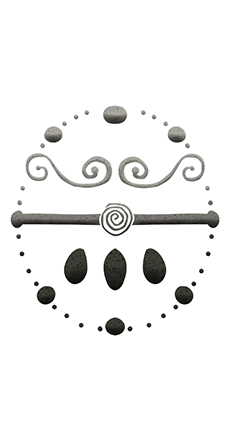
The image presented above originates from a coin of the Carnutes tribe, and it has been updated with added layers of meaning and significance. In an upcoming article, I will expound upon the transformation and enrichment of this symbol, shedding light on the profound depths of its new connotations.


 The Witch's and Druids Den
Leave a comment