


These are the reasons why I believe Sucellos is both a creator/father deity and a polyfunctional one.
This discussion pertains to my personal connection with him, I am not asserting any of this as the ultimate truth. I am drawing upon practical knowledge derived from my years of expertise in various crafts and trades to closely examine his characteristics. This includes a combination of verified information, speculative insights, and my personal gnosis to construct an understanding of why he is perceived as the Creator/Father god in my bessus.
SUCELLOS AND THE MOON
In Julius Caesar’s writings about the Gauls, he asserted that they traced their lineage back to a Gaulish Dis Pater, a Roman deity associated with the underworld and the dead.
The Gauls claim that they are all descended from one father, Dis, and they say that this is the teaching of the Druids. For this reason, they define the passage of time by nights rather than days: They observe birthdays and the start of months and years in this way, with day comes after night.”
De Bello Gallico (6; 18)
This interpretation, known as interpretationo Romana, reflects the tendency of ancient Roman writers to equate foreign deities with members of their own pantheon, possibly to make foreign beliefs more relatable to their Roman audience.
The Senodruides, or Ancient Druids, indeed taught about divine ancestry in their teachings. However, it remains uncertain which Gaulish god Caesar was referring to as a Gaulish equivalent of Dis Pater. Scholars have debated this question extensively, and it remains a topic of discussion and mystery, with numerous papers and studies exploring the possible candidates for a Gaulish Dis Pater.
LET US TAKE A LOOK AT THE TWO GODS
Dis Pater’s name is often interpreted to mean “father of riches,” and he is considered a Chthonic god, associated with the underworld, which signifies his connection to the realm beneath the earth’s surface. He is linked to various aspects, including fertility, agriculture, minerals, and wealth, particularly the riches that are extracted from the earth.
Sucellos, whose name translates to “The Good Striker,” is often depicted with various symbols, including a long-shafted hammer, an olla (a pot), wine, barrels, and a dog. His hammer can have multiple interpretations, such as a tool for winemaking, driving fence posts, or even a coppersmith’s tool. Sucellos is associated with several domains, including agriculture, forests, alcohol, wealth, fertility, feasts, providence, and protection. He is also connected with Nantosuelta, who is considered his consort, and their characteristics and domains appear to share certain parallels.
Both Dis Pater and Sucellos represent complex and multifaceted aspects of ancient beliefs, with connections to the earth, fertility, wealth, and various other aspects of life/Death and the natural world.
In his work, the Greek historian Strabo presents a curious account:
Some say that the Callaicians have no gods, but the Celtiberians and their neighbors in the north offer a sacrifice to a nameless god, at night, during the full moon, in front of the doors of their houses, and the whole household dances and stays up until dawn.
Gepgraphica 3.4.15
This passage has long been the subject of extensive discussion within the scholarly community. It raises several intriguing questions: What did Strabo mean by “northern neighbors”? Did he refer to all of Gaul or just certain tribes? What significance lay behind these full-moon traditions? Who or what represented this enigmatic Nameless God? Some researchers and archaeologists have postulated the existence of a moon cult among the Gauls, suggesting that the moon itself may have been the object of their veneration. However, this theory has faced criticism and remains inconclusive.
The researcher Francisco Marco Simon offers an alternative interpretation of Strabo’s narrative. He posits that Strabo’s mention of a Nameless God might have been a rhetorical device employed to portray these people as primitive or uncivilized. As per this view, it remains uncertain whether such a deity truly existed. Strabo’s intent could have been to illustrate the perceived lack of sophistication in the religious beliefs of the Celtiberians, a characteristic that the Greeks often equated with barbarism.
Marco Simon further contends that the Nameless God, supposedly worshiped by the Gauls, might have been the same deity from whom they claimed descent. Additionally, he asserts that Dis Pater shares the closest connection with Sucellos, citing similarities in their functions and attributes.
The evidence suggests that a significant portion of Gaul accorded greater reverence to the moon and the night compared to the sun and the day, a fact exemplified by Julius Caesar’s statement: “The Gaulish calendar, counting days, months, years by nights, rather than days.” It raises the possibility that the Gaulish Dis Pater may have held a role as a timekeeper, potentially indicating the veneration of the moon and the night sky.
Furthermore, the partnership between Nantosuelta and Sucellos carries multiple interpretations. Among them are etymological ties to concepts like “Meandering Brook” and “She of the Sun-Warmed Valley.” These connections serve to complement their symbolic roles, with Nantosuelta representing the sun and Sucellos embodying the moon and the night.
SUCELLOS IN THE UNDERWORLD
Let’s avoid any confusion regarding the concept of the underworld as a gloomy and sinister realm filled with the departed souls. In the Gaulish context, the underworld appears to be a place associated with rebirth and renewal, where life emerges from the darkness.
Evidence from inscriptions near Ettlingen suggests that Sucellos had a role connected to funerary practices (Mostly coming from Nantosuelta). In regions like the Lower Rhine and Romania, Sucellos is often depicted alongside a three-headed dog and a raven. The three-headed dog may bear a resemblance to Hades’ guardian, Cerberus. However, it’s important to note that Hades’ dog was typically portrayed as a menacing creature, a depiction that doesn’t align with Sucellos’s benevolent image. In Gaulish culture, dogs played multifaceted roles in hunting, healing, and the passage into death, as their saliva was believed to possess potent healing properties. In a Gaulish context, these dogs seem to symbolize a theme of rebirth, representing their chthonic role. It’s also possible that Sucellos could be associated with the divine hunt, a motif tied to renewal and resurrection after death.
Ravens, on the other hand, are regarded as oracular and prophetic creatures. They might symbolize liberated souls departing from the physical body. Ravens are carrion birds, which means they are associated with the consumption of decaying flesh from deceased animals or humans. This association links them to themes of death, rebirth, renewal, and the underworld. While ravens have various symbolic meanings, we will focus on their role in the context of the underworld.
Additionally, Sucellos’s connection to agriculture and possibly smithing, though not related to Iron Age smithing, underscores their chthonic nature. Both of these aspects of Sucellos’s domain rely heavily on the resources found beneath the Earth’s surface.
SUCELLOS IN THE FOREST
Sucellos connection with Silvanus
In the southern regions of Gaul, Sucellos finds an intriguing connection with the deity Silvanus. To delve deeper into this association, it’s essential to first explore the character of Silvanus himself. Silvanus was a Roman god celebrated for his dominion over the woodlands and the untamed aspects of nature. He was often regarded as a guardian of peasants and rustic life, presiding over domains such as vegetation, forests, domesticated nature, and fertility.
Silvanus took on the role of safeguarding the wild forests and their denizens, demonstrating his prowess as a hunter and a bestower of abundance. His symbolism was diverse, with depictions sometimes portraying him wielding a long-shafted hammer or a billhook, emphasizing his connection to the land and its resources.
In iconography, Silvanus was occasionally depicted donning a wolf pelt or a tunic, further emphasizing his embodiment of the untamed and pastoral aspects of nature. Notably, there are instances where inscriptions have been discovered that combine the names Silvanus and Sucellos, suggesting a blending or equating of the two deities in specific locales.
In numerous regions, this merging led to the identification of Sucellos as a woodland deity, highlighting the fluidity and adaptability of religious beliefs in ancient Gaul. Sucellos’ connection with Silvanus underscores his multifaceted nature and his ability to encompass a wide spectrum of attributes, from agriculture and chthonic realms to the guardian and provider of the forest’s bounties. This association also highlights the rich tapestry of beliefs and traditions in Gaul and the intricate interplay between indigenous Celtic deities and Roman influences in the region.
SUCELLOS AND THE SMITH
Sucellos, often associated with the realm of the forest and nature, also exhibits a compelling connection to the world of smithing and craftsmanship. This multifaceted deity shares qualities with other smithing gods found in Gaul, such as Gobannos and Ucuetis.
One of the defining attributes of a smithing god is their role as skilled craftsmen. They possess divine knowledge of metallurgy and craftsmanship, and their work is seen as almost magical, as they transform raw materials into useful objects and art.
Sucellos was a widely venerated deity throughout Gaul, often accompanied by his partner, Nantouelta. His name, meaning “The Good Striker,” hints at his association with the act of forging and crafting, as “kuel” is a root word in Indo-European cultures associated with smithing deities. Sucellos is frequently depicted wielding a long-shafted hammer or maul, in addition to various winemaking tools. He is also recognized as an agricultural god. His significance in Gaulish culture makes him relatable to the common people, emphasizing his role as a protector and provider.
Examining Gaulish smithing gods, we find Gobannos and Ucuetis. Gobannos, whose name implies a connection to the blacksmith, is mentioned as a world traveler in inscriptions from Brennoduron in Bern, Switzerland. This suggests his widespread recognition among different Celtic groups. There are even hoards of items dedicated to Gobannos, some of which incorporate his likeness with that of the Roman god Mars. This fusion highlights the prominence of smithing Dêuoi in Gaul. Ucuetis (Divine Breath), associated with Alisa, was often coupled with his consort Bergusia, whose name translates to “Mountain.” This pairing embodies the connection between the mountain, which harbors valuable minerals and ores, and the breath that fuels the fires of the forge. This interpretation ties Ucuetis to the bellows, as the flow of air breathes life into the fire, essential for crafting. They are divine Hospitalers. They brew drinks host the Otherworldly feast and have animals connected to the Otherworld.
Nantouelta, Sucellos’ companion, is also significant in this context. Her name, meaning “Sunwarmed Valley” or “Winding River,” embodies elements of the earth and fertility. Whether it refers to a valley or a river, both are intimately connected to the earth. She is a goddess associated with prosperity and domesticity and is depicted with symbols like a long pole with a house on it, a cornucopia, a patera, a beehive, and ravens. These symbols suggest a link to the otherworld, possibly indicating a chthonic dimension to her character.
In ancient Gaul, the village blacksmith held a central role in the community. They were considered master craftsmen and held a mystical, almost supernatural status due to their ability to transform raw materials into valuable tools, weapons, and art. The forge was often seen as the heart of the village, and the blacksmith played a pivotal role in supporting other trades by crafting their tools. Smiths frequently combined their craft with farming, emphasizing their integral role in the community. Smithing comes in various forms, including blacksmithing (working with iron and steel), brownsmithing (dealing with brass and copper), whitesmithing (working with lead, pewter, and their alloys), tinsmithing (utilizing tin), goldsmithing (working with gold), silversmithing (dealing with silver), and coppersmithing (working with copper). Each specialization was essential for creating a diverse range of tools and objects vital to daily life.
In the world of smithing, the anvil held mystical significance. It was believed to emit sounds as the metal was struck, and these sounds were seen as warding off evil. This belief in the magical properties of the anvil is a form of apotropaic magic, meant to protect against harm.
Brave iron, Brave hammer, from your sound
The art of music has her ground.
On the anvil thou keep’st time
They knick a knock is a smith’s best chime
(Song of the Cyclops by Thomas Dekker,1629)
Silvanus, a god associated with nature and often assimilated with Sucellos, is depicted in some instances holding a hammer and a syrinx, which is a set of pan-pipes. This combination raises intriguing questions about the relationship between craftsmanship and music in the context of these deities.
Sucellos’ connection to smithing and craftsmanship is a testament to the diverse and multifaceted nature of ancient Gaulish beliefs. His association with other Dêuoi like Gobannos, Ucuetis, and Nantouelta enriches our understanding of the interplay between nature, craft, and spirituality in this ancient culture.
SUCELLOS AND THE HAMMER
It’s important to distinguish between hammer gods and smithing gods, as not all deities associated with hammers are directly linked to the art of smithing. However, it’s noteworthy that all smithing gods are inherently connected to hammers, making the symbolism of the hammer incredibly profound. Sucellos, an indigenous Gaulish god, embodies this symbolism in a complex and profound manner, holding a position of the highest importance throughout Gaul. Sucellos stands as an indigenous Gaulish deity, with minimal influence from classical gods except for some naturalistic aspects in his iconography. His depictions and symbols have been discovered in various regions of Gaul, underlining his widespread recognition. Notably, symbols of hammers have been found carved into stones and on altars, with a substantial number of these vocative hammers found in proximity to spring sanctuaries.
The iconography of the hammer god is multifaceted, showcasing various functions and attributes. Sucellos is often depicted as a bearded, mature male clad in traditional Gallic attire, including a tunic and a cloak. In the territory of Narbonensis, he appears adorned with a wolfskin cloak and a leaf crown, possibly due to local influences or assimilation with deities like Silvanus. The Roman Historian Appinos stating that the Celtiberians knew Specific Heralds that would be robed in wolfskins as we see that in some Sucellos depictions.
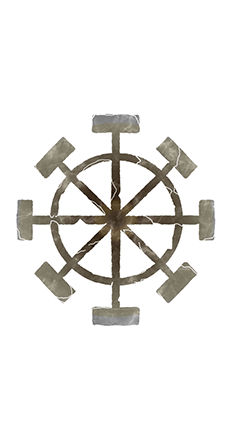
The hammer, a central symbol in the iconography of Sucellos, carries numerous layers of meaning. It is typically portrayed as a long-shafted hammer, often accompanied by a small pot and, in some instances, a dog. Near the Rhone Valley, Sucellos’s imagery takes on associations with wine and harvest, particularly grape harvest. This imagery is particularly prevalent, suggesting its significance in these regions, and is also found in places like Alesia. At Vienne, an intriguing depiction of Sucellos features what appears to be a celestial symbol alongside him—a wheel-like symbol resembling the sun or moon with hammers radiating from it. This imagery hints at a potential celestial association. The presence of hammers near shrines and spring sanctuaries, sometimes accompanied by human limbs, suggests a healing role attributed to Sucellos, aligning with the smith’s role in repairing tools.
Sucellos’s symbolism connects him to earthly aspects such as prosperity and abundance, rooted in the fertile lands he oversees. The hammer, with its multifaceted utility, may symbolize various concepts, including protection, boundaries (as a tool for fence-making), and even seasonal changes through its striking of the earth.
An intriguing relief found at Carpentras in southern Gaul displays a hammer on one side and a double-ax on the other. This combination may represent a symbol resembling a thunderbolt, as suggested by J.J. Hatt. The double-ax could symbolize looking in both directions, signifying a connection between the lower and upper worlds and dominion over both realms.
Depictions of Sucellos often feature the hammer pointed either upward or downward. The upward position can be interpreted as his connection to the sky, symbolizing a thunderbolt bringing storms. Conversely, the downward position signifies the bestowal of fertility upon the earth, emphasizing his role in the cycles of nature and prosperity.
His symbolism is rich and multifaceted, reflecting his importance as a Gaulish deity associated with the cycles of life, prosperity, and the connection between the earthly and divine realms. The hammer serves as a powerful and versatile symbol, embodying various aspects of his multifaceted character and responsibilities.
SUCELLOS AND THE CAULDRON
Sucellos is not only associated with the hammer but also with another powerful symbols like the cauldron. This symbol carries profound meanings, often encompassing ideas of regeneration, replenishment, and the guardianship of life and death. The cauldron held by Sucellos signifies themes of renewal and replenishment. It represents the cyclical nature of life and the perpetual flow of existence. Just as a cauldron can hold and provide nourishment, Sucellos is seen as a deity who watches over and sustains life in all its forms. In some depictions, Sucellos’s cauldron contains association with wine, which can be interpreted as a representation of resurrection. Red wine, in particular, holds a powerful association with blood, suggesting a connection to life force and vitality. This symbolism highlights the idea that Sucellos oversees the cycles of life, death, and rebirth. The Celtic cauldron is regarded as a potent symbol of transformation and renewal. It mirrors the natural cycles of the seasons, where life emerges, withers, and is reborn. This symbolism, emphasizes his role as a guardian of these eternal cycles.
Another possible interpretation of the cauldron in Sucellos’s iconography is its connection to the roles of a coppersmith or blacksmith. These craftsmen used quenching bowls to cool down heated metal, a process believed to imbue the metal with magical properties. In this context, the cauldron may represent the transformative power of fire, further linking Sucellos to the themes of rebirth and renewal. While the notion of drinking from a magical cauldron to cure ailments is not explicitly found in Gaul, it is a concept that emerged in later European folklore. Some tales suggest that the waters within such cauldrons possessed healing properties, reinforcing the idea of the cauldron as a source of rejuvenation and vitality.
SUCELLOS AND THE FARMER
Sucellos also holds a significant place in the hearts of farmers and those who toiled the land. His symbolism and attributes are intimately linked with agricultural prosperity and the well-being of the agricultural community In his iconography, Sucellos is often depicted with agricultural tools and symbols, further emphasizing his role as a guardian of the farmer’s way of life. These tools may include plowshares, scythes, or sheaves of grain, all of which represent the essential elements of agriculture. Sucellos can be regarded as a guardian of agricultural abundance. His association with the earth and fertility highlights his role in ensuring bountiful harvests and the prosperity of farming communities. Farmers can look to Sucellos for guidance and blessings to nurture their crops and ensure a successful yield. His connection to the land is profound. He embodies the spirit of the earth, cultivating a sense of harmony between humanity and the natural world. On could say ancient farmers saw in him a deity who watched over their fields, pastures, and orchards, ensuring the fertility and vitality of the soil. Sucellos’s influence extends to the cycle of seasons, as he oversees the transitions from planting to growth, harvest, and the fallow period. On can look to his favor during each stage of the agricultural year, invoking his blessings for favorable weather, healthy crops, and abundant harvests. Farming communities often faced challenges from natural forces, such as adverse weather conditions or pests that could threaten their livelihoods. With that he can be seen as a protector, shielding the crops and livestock from harm and ensuring their well-being. Sucellos’s influence on seasonal rhythms is paramount. As the cycles of planting, growth, and harvest mirrored the broader rhythms of life and death, he can be a symbol of the interconnectedness of all living things and the cyclical nature of existence.
Sucellos played a vital role in the lives of farmers, offering them guidance, protection, and blessings for their agricultural endeavors. His symbolism and attributes celebrated the richness of the earth and the importance of nurturing and stewarding the land for the prosperity of the community. Sucellos’s connection to the farmer and the cycles of agriculture highlights the depth of his influence in Gaulish culture.
SUCELLOS AND THE BOUNDARIES
Sucellos is often seen as a protective guardian, and this role extends to the delineation and safeguarding of boundaries. Boundaries hold significant importance, demarcating not only physical territories but also spiritual and symbolic realms. His association with the hammer, when viewed as a boundary tool, becomes symbolic of his role in creating and reinforcing limits. The hammer could represent the act of setting boundaries, both in the physical and metaphorical sense. Also his connection to the chthonic realm and the earth suggests his influence in establishing and maintaining boundaries between the terrestrial world and the otherworld. This role is essential for maintaining order and balance in the cosmos.
Boundaries are often considered sacred, and Dêuoi like Sucellos holds a pivotal role in their preservation. His reverence for boundaries stemmed from the belief that they held spiritual and cosmic significance.

REFERENCES
- The Country blacksmith – David l. McDougall
- Metalworking – Hasluck
- Journal of Indo-European Studies 58 – Vaclav Blazek
- Dictionary of Celtic Mythology – MacKillop
- Symbol & Image in Celtic Religious Art – Miranda Green
- Dictionary of Celtic Myths and Legends – Miranda Green
- Celtic Mysteries – John Sharkey
- The Gods Of The Celts – Miranda Green
 The Witch's and Druids Den
Leave a reply to Celicnon Sucellî — The Carnutian Nemeton | Die Goldene Landschaft Cancel reply