
Delving into the Significance of the Carnutes’ Moniker
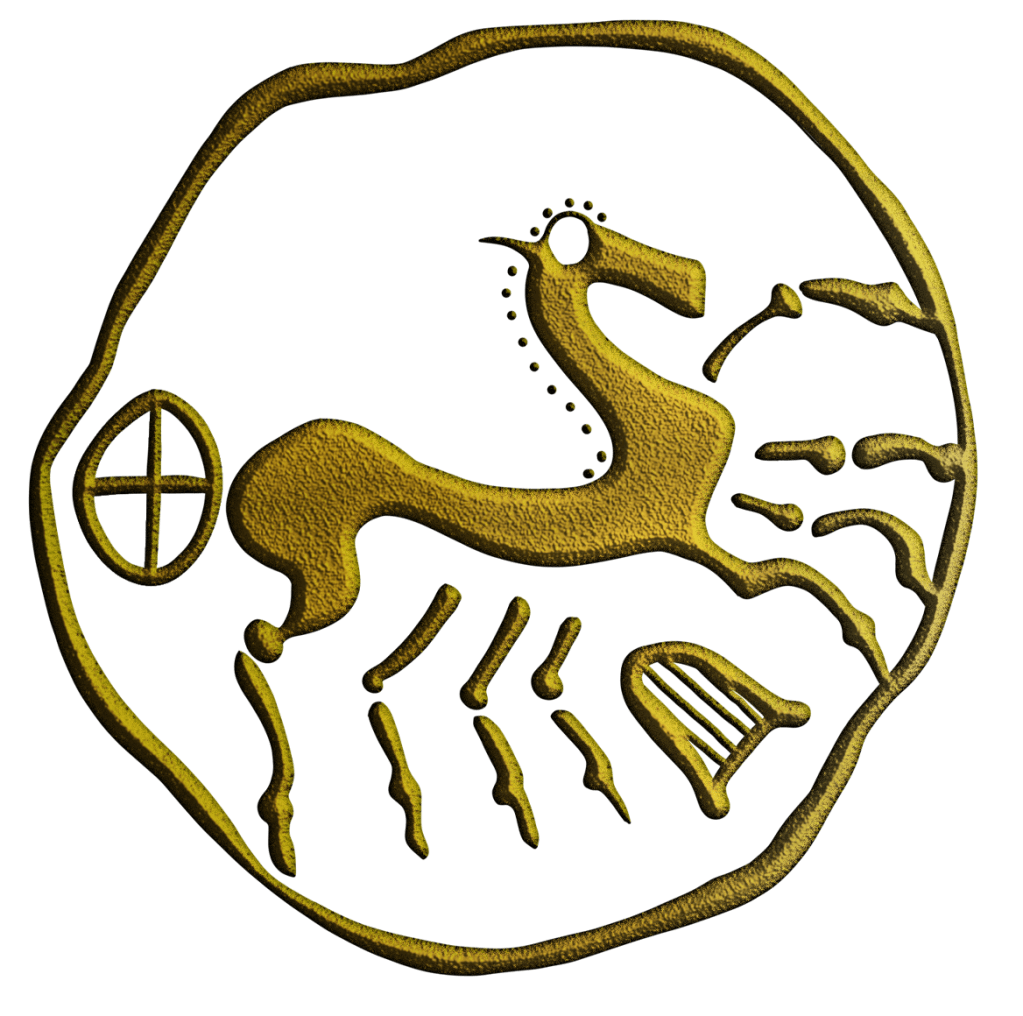
The name “Carnutes” finds its linguistic roots in the Celtic *karno, the Irish *carn, and the Gaelic *cairn, all of which imply a pile of rocks or a rough slope. This etymological structure is notably present in the toponymy surrounding Chartres. The link between “Carnutes” and the god’s name “Cernunnos,” once believed to signify “horns,” is now mostly relinquished in favor of an interpretation related to “horned helmets.” An alternative hypothesis traces it back to an Indo-European root *ker/kor, also present in the Celtic name for dogwood, connecting the Carnutes to Cornwall and Cornouaille through a totemic tree. Nonetheless, uncertainty persists, and the name’s true origin remains elusive. Many believe it translates to “Those of the Horns” or “The Horned Ones.”
Below is the name presented in the Gaulish language:
Singular: Carnutis / Carnuð
Plural: Carnutīs / Carnutes
While our name bears a resemblance to Carnonos, the connection extends beyond mere phonetics, encompassing location as well. Carnonos has been discovered in the Parisii territory (Parisiicā), situated on our borders. It’s plausible that the Carnutīs were named after Carnonos, and it’s conceivable that inscriptions and statues dedicated to him once adorned the lands of Carnuticā, although this remains speculative.
Ultimately, the importance of the name Carnutīs for us today transcends its historical roots. Meanings evolve over time; symbols accrue significance with age. To me, the name Carnutīs encapsulates “Those of the Horns,” symbolizing both the Carnux, the fiery voice that ignited the war, and the embodiment of qualities such as passion, courage, piety, honor, and the determination to safeguard the greater good against imperialist domination. Cotuatus exemplified this ethos, leading the Carnutīs to amplify their voices like the resounding Carnux, shaking and arousing the lands of Gaul.
Additionally, the name signifies “Followers of Carnonos,” delving into the symbolism of Horns/Antlers. These symbols have multifaceted meanings, ranging from representing waterways, pathways, and liminality to denoting the spaces between all things. They have also come to signify spiritual authority, with depictions of antlered figures found across France since antiquity. Given that Carnuticā hosts the great gathering of the Druides, this symbolism aligns, as they are spiritual leaders.
These reflections are personal, a contemporary perspective rather than an assertion of historical truths. They serve to breathe life into what was lost, enriching it with meaning. In this process, I am engaged in Soitos (Magic), reviving and enhancing, so that we can derive significance for today. This allows us to embody the spirit of what our ancestors stood for, carrying it forward into our modern lives.
 The Witch's and Druids Den