


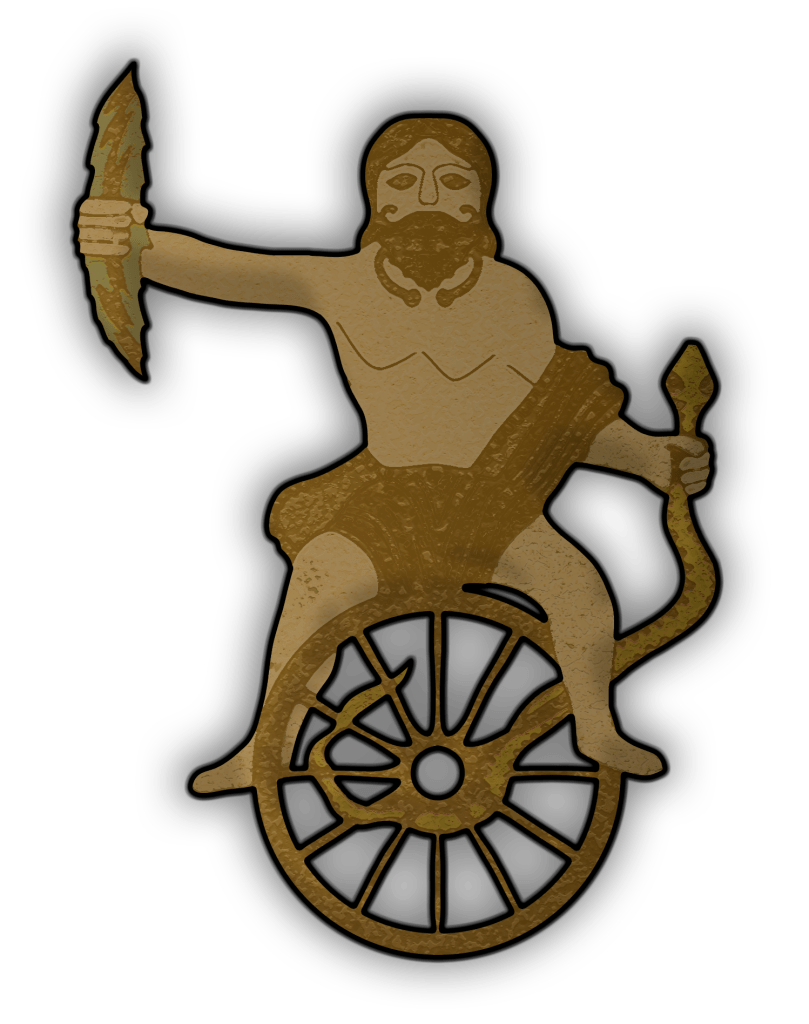
The name “Taranis” is derived from the word for thunder. Notably, Taranis was also revered in Britain. We find variants of his name which include Taranus and Tanaros. His name inherently associates Him with thunder. The most recognizable symbol linked to Him is the Wheel (Rotos), often depicted on votive wheels. Although the number of spokes varies, six and eight are most frequently seen. Yet, not all wheel motifs in the Gaulish context are directly connected to Taranos. The thunderbolt and a club, likely represent the thunderbolt.
This is not an academic write up
Inscriptions
Refer to Taranus Inscriptions by Cunolugus
The Natural World
As the god of thunder, Taranos commands storms. Thunder, lightning, rain, and wind are inherently linked to storm phenomena. Reflecting on these elements, we can deduce potential aspects of His domain.
- Rain is vital for crop growth, impacting farmers and the entire community’s sustenance.
- Lightning showcases his’ destructive force, yet it also enriches the soil with nitrates, aiding crop development. Although ancients might not have understood nitrates, they likely recognized lightning’s benefits to the soil. This duality represents creation and destruction, indicative of his power to end or renew life.
- Thunder resonates like a bellow from the heavens, asserting its presence. Some believe he might also embody the Gaulish Sky Father. The Jupiter columns along the Rhine, depicting Jupiter vanquishing a monstrous adversary, echo patterns seen in other Indo-European thunder gods like Thor and Indra.
- Wind is important for blowing seeds and fertilizing plants.
The Warrior
He’s also perceived as a warrior and protector, echoing the neighboring Germanic deity Thunaraz. The Berne Scholia labels Taranos a “master of war,” highlighting his connection to battle and his struggles against chaotic forces.
- Keeper of Balance
- In this intricate cosmic dance, Taranos emerges as the pivotal figure, ruling over Albios, which is connected to the Samos principal. Taranos, the champion of the cosmic order, upholds the energies Samos keeping the energies at Giamos at bay ensuring equilibrium between the radiant and the enigmatic. His thunderous presence defends the delicate balance, allowing each principle to harmonize while countering the encroaching chaos.
Please take a look at an amazing article ”Jupiter Columns and the Maintaining of Cosmic Balance”
- In this intricate cosmic dance, Taranos emerges as the pivotal figure, ruling over Albios, which is connected to the Samos principal. Taranos, the champion of the cosmic order, upholds the energies Samos keeping the energies at Giamos at bay ensuring equilibrium between the radiant and the enigmatic. His thunderous presence defends the delicate balance, allowing each principle to harmonize while countering the encroaching chaos.
The Wheel and its Teachings
The teachings of the wheel that Taranos imparts encompass a profound understanding of cosmic principles (Samos and Giamos) and the intricate balance between creation and destruction. As the Deuos of thunder, rain, wind, and lightning, Taranis symbolizes the raw forces of nature that govern storms. These forces, often represented by the wheel, hold valuable lessons for us. The wheel, a central symbol linked to Taranos, holds multi-faceted meanings. Beyond its representation as rolling thunder and perpetual motion, it embodies the concept of cosmic order. Just as storms bring chaos and renewal, the wheel signifies the cyclical nature of existence. Taranis, in His role as both a destructive and creative force, mirrors this dual aspect of the wheel’s symbolism. Taranos teaches us the delicate balance between destruction and preservation. Just as storms may bring devastation, they also enrich the soil and foster growth. This duality is mirrored in the wheel’s symbolism, reflecting the interplay of forces that sustain life’s cycles. Through this, Taranos illustrates the necessity of understanding the interconnectedness of seemingly opposing forces. Taranos also embodies the role of a protector and warrior. In the face of chaos and adversity, His strength shines through, defending against threats to cosmic order. This aspect of His persona serves as a reminder that in the cyclical nature of life, challenges and conflicts are inherent. His ability to stand firm amidst chaos teaches us resilience, courage, and the importance of safeguarding order, even in the midst of turmoil.
Taranos encourages us to recognize the divine presence in the natural world and to acknowledge the impact of cosmic forces on our lives. Just as thunder resonates with power and presence, Taranos inspires us to be attuned to the world around us, embracing its intricacies and mysteries. He invites us to seek deeper truths and insights by exploring the dynamic interplay of creation and destruction, chaos and order. His embodiment of the wheel’s symbolism serves as a guide to finding harmony within life’s cycles, and His lessons resonate in our pursuit of understanding the cosmos and our place within it. Through contemplation and attentive listening, we can uncover profound truths that he offers embracing the wisdom inherent in the cosmic dance of storms and renewal.
The Wheel and Virtue
A profound truth awaits those who seek to understand the interplay between chaos and order. It is said that Taranos himself, as the god of thunder and storms, brings to us the Îanoi—the core virtues that guide our existence. These virtues, like the spokes of a mighty wheel, are integral to maintaining the cosmic order that governs our lives. Imagine, if you will, a colossal wheel at the heart of existence. At its very center lies the essence of all that is. This center is where Taranis resides, embodying the raw forces of nature and the essence of creation itself. As one ventures outward, approaching the rim of the wheel, they encounter the myriad elements that form their world: family, community, and the vast expanse of the cosmos. These elements constitute the outer rim, encompassing all that surrounds us. Now, picture each virtue as a spoke extending from the wheel’s center to its outer edge. These virtues such as courage, wisdom, compassion, piety, duty, right speech, hospitality, generosity, truth, honor, justice, pride, and many more—reach out like radiant beams, connecting the center to the rim. When all virtues are present and aligned, the wheel can roll forward smoothly, representing the harmonious motion of life guided by the principles of order.
However, if the spokes are too few or misaligned, the wheel becomes unstable. The journey becomes tumultuous, much like navigating a path without the guidance of virtues. The wheel may even break apart, symbolizing the disintegration of the order we strive to uphold. In this intricate metaphor, everything is interconnected—the center, the spokes, and the rim. Just as each spoke contributes to the wheel’s integrity, every virtue influences and shapes our lives. The cosmic order that Taranis represents is not a static entity; it is a dynamic and ever-evolving cycle. Each spoke affects the others, just as our actions and decisions ripple outward, impacting our families, communities, and the world at large.
This concept finds embodiment in the Ambactos Rotî (Servent, Ambassadors of the Wheel), those who embrace the teachings of the wheel and dedicate themselves to its perpetual motion. As ambassadors of the wheel, they recognize the importance of cultivating virtues within themselves and within their communities. They understand that by aligning with the Îanoi, they ensure a smoother and more harmonious journey through the cycles of life. In the great cosmic dance of chaos and order, Taranos teachings remind us that our actions are interconnected, shaping the world around us. By embodying the virtues and following the ever-spinning motion of the wheel, we become stewards of the cosmic order, striving to keep the wheel of existence rolling forward in harmonious balance.
Acquire a wheel pendant to adorn, and as you grasp it, speak aloud your virtues. Engage in meditation, contemplating those virtues you’ve elevated and the reasons behind your choices. Reflect also on those virtues you’ve stumbled upon and the underlying causes.
Wheel Mantra
“Wheel of virtues, light my path,
balance, grow, and virtues shine,
In cosmic dance, all align.”
A Story of Devotion
In a village where chaos held sway, the land was battered by relentless storms. Thunder rumbled incessantly lightning forked across the sky and torrential rains flooded the valleys. The people of this village lived in fear, for chaos ruled every aspect of their lives.
In the heart of this tempest-ravaged land, a humble village stood. Its inhabitants, tired of the ceaseless turmoil, gathered to seek a solution. Among them was a wise elder Druið, known for his connection to the elements and his profound insights. One evening, as the thunderclouds gathered ominously overhead, The Druið gathered the villagers around a bonfire.
“Friends,” he began, his voice carrying above the howling winds, “within chaos lies the seed of order. Just as lightning strikes with destructive force, it also brings new life through the soil.” The villagers listened intently, their faces illuminated by the fire’s glow. The Druið continued, “Let us not shy away from the chaos that surrounds us, for within its heart lies the potential for renewal. We shall build a great wheel, a symbol of the cosmic order that exists even in the midst of chaos.”
Inspired by the Druið, the villagers set to work. They gathered materials from the storm-ravaged land and crafted a magnificent wheel. As they worked together, they realized that amidst the chaos of the storm, their unity brought forth a sense of purpose and shared strength. Once the wheel was completed, the Druið led the villagers to a high hill overlooking the village. As the storm raged around them, lightning illuminating the sky, they raised the wheel high.
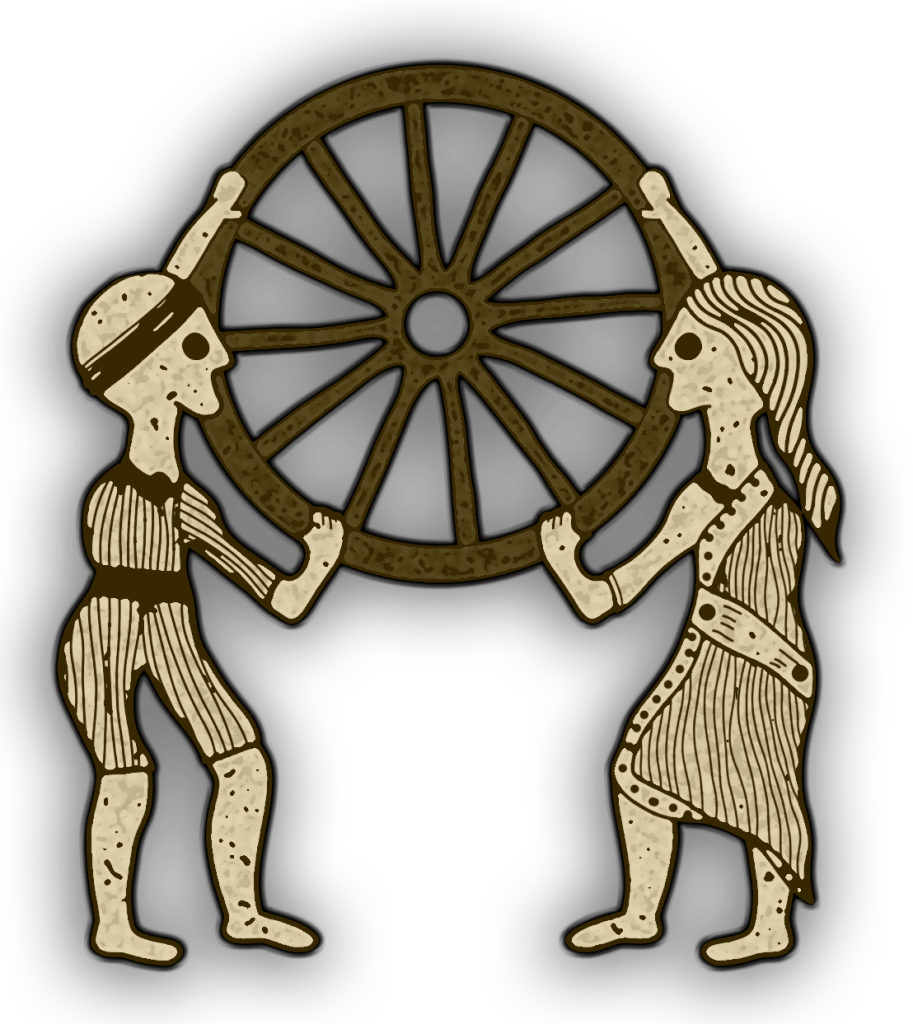
“This wheel represents the cycle of creation and destruction,” the Druið proclaimed, his voice ringing clear through the tumultuous winds. “Just as thunder shakes the ground and lightning tears the sky, so too can we harness chaos to bring about order.” With a resounding cheer, the villagers released the wheel into the tempest. It spun with wild abandon, a dance of chaos and order intertwined. As the wheel spun, a remarkable transformation occurred. The storm’s fury began to subside, the thunder’s roar softened, and the rains transformed into a gentle shower.
The villagers watched in awe as the chaos that had once tormented them now began to yield to a newfound order. The wheel’s dance seemed to harmonize with the elements, a reflection of the delicate balance between destruction and renewal. As the storm finally abated, a rainbow arched across the sky, its vibrant hues symbolizing hope and promise. The villagers realized that by embracing chaos and guiding its energies, they had brought forth a renewed sense of harmony.
The teachings of the Druið had borne fruit, demonstrating that within the heart of chaos lay the potential to cultivate profound order. And so, in the village once dominated by chaos, the villagers learned to dance with the storm, shaping its forces to bring about renewal and cosmic harmony. The wheel they had set in motion stood as a constant reminder that even in the face of chaos, the pursuit of order was both a challenge and a triumph worth striving for. All Hail Taranos
Prayer to Taranos
Mighty Taranos, God of thunder’s roar, Your name resonates through ages past, In storms and skies, your power soars, Guiding us with wisdom that forever lasts.
Bearer of the wheel, cosmic balance you maintain, Spinning forces of creation and decay, In chaos and order, your teachings sustain, Grant us strength to tread the righteous way.
As rain nourishes the Earth’s embrace, So do your lessons nurture our souls, Through lightning’s strike, truth we embrace, In winds of change, your guidance unfolds.
Protector of realms, both seen and unseen, Your thunderous voice echoes in our hearts, Grant us courage and purpose, serene, As the storm’s dance, your presence imparts.
Ambactos Rotî, we stand united, Devotees of the wheel, its virtues we hold, In your name, Taranos, we’re guided, As cosmic forces around us unfold.
All Hail Taranos, bringer of cosmic order, May your presence ever illuminate, With gratitude, reverence, and hearts that border, On the harmony you teach, never to abate.
The Summer Feast
Because of his associations with divine order and storms which are prevalent in the summer. We of Bessus Nouiogalation dedicate the first quarter moon nearest the summer solstice, Samolitus (Summer Feast), to Him. This time signifies the height of the light, possibly symbolizing victory over a chaotic winter foe, reflecting His role as a slayer of chaotic entities.
To Sum up
Taranis possesses qualities of both a thunder god and a Sky Father, evident in the cosmic order symbolized by the wheel. Armored depictions suggest an eagle association. Thunder gods’ strength often aligns them with bulls, and oak trees, common in thunder god iconography, may apply to Taranos as well. The wheel is an enigmatic symbol. Although it isn’t likely a solar emblem, it doesn’t equate to solar deities. The wheel conveys various meanings—rolling thunder, perpetual motion, and cosmic order. Taranis balances destruction and preservation, and this duality is embedded in the wheel’s symbolism. Taranos represents both destructive force and the ability to maintain the cycle of life. He’s a warrior protector, defending all. The wheel epitomizes perpetual motion and order, bound by truth. He governs truth to sustain order. Following his example, we should seek truth in our lives, nurturing genuine order, not just its illusion. His worship offers significant insights for those who reflect and seek. It’s up to us to uncover those truths and listen intently.
Please check out the write-up about Taranis from Cunolugus
This article is also dedicated to a friend.
 The Witch's and Druids Den
Leave a comment