



As the Hammer creates, it destroys, and as it destroys, it creates.
Carnutos
As a devotee of Gobannos, I will share with you all the things I have learned from him.
Gobannos is our Deuos of blacksmithing/Crafting, skillfully shaping and molding minerals sourced from the depths of the Earth. In Gaulish Mythology, it is likely that Gobannos would be responsible for crafting magnificent otherwordly weapons, jewelry, and various artifacts for the gods. The name Gobannos or Cobannos derives from the Proto-Celtic term *goben-, meaning ‘smith.’ Variations of this name can be found in personal names such as Gobannitio, who was the uncle of Vercingetorix, as well as Gobannicnus and Gobano.
Inscriptions
- The Gobannos Tablet Found in Germania Superior, AE 1995, 01143 ΔΟΒΝΟΡΗΔΟ ΓΟΒΑΝΟ ΒΡΕΝΟΔΩΡ ΝΑΝΤΑΡΩΡ
“Dedicated to Gobannos, the world-traveler, by the people of Brennoduron in the Arura valley.”- This tablet, also known as the Bern Zinc Tablet, was discovered in Bern, Switzerland, in 1980 and is made of Zinc with Greek inscriptions. Based on his epithet “Dobnoredos,” which combines “dumnos” meaning ‘world’ or ‘deep’ and “redo-” meaning ‘horseback riding’ or ‘traveling,’ it is suggested that Gobannos possesses the essence and knowledge of smithing bestowed upon humanity from the depths of the Earth, where the minerals for crafting reside.
- Lugudunensis AE 1994, 01915
Aug(usto) sacr(um) deo Cobanno / L(ucius) Maccius Aeternus / IIvir ex voto
“To the venerable and holy god Gobannos, Lucius Maccius Aeternus, the duoviri, has fulfilled his vow.” - Lugudunensis AE 2000, 01845
Deo Coban(n)o / Geminianus / Solini v(otum) s(olvit) l(ibens) m(erito)
Geminianus Solinus willingly fulfilled a vow as is proper to the God Cobannus - Lugudunensis AE 2000, 01846
Augusto=V / sacrum / deo Coban/n=U / M(arcus) Tutus Cassio
Marcus Tutus Cassio [gave] sacred to the god Venerable Cobannus - Lugudunensis AE 2000, 01847
Deo Cobanno Samotalus Brigonis filius / Augustodunensis ex voto suscepto
Samotalus Augustodunensis son of Brigonis undertaken from a vow to the God Cobannus - Lugudunensis, Fontenay-pres-Vezelay / Haedui CAG-89-01, p 373
Aug(usto) sac(rum) [de]o / Cobanno / AI[3]V[3] / AI[3] / Leug[ani] filius
A(?) A(?) son of Leuganus [gave] sacred to the god Venerable Cobannus - Ford (Kent) RIB 1934,0111.1
…GOBAN…/…OGVLP…/…ANTIS…/…VS…
In earlier times, blacksmiths played a significant role in fashioning metal into functional and desirable objects that fulfilled people’s needs. They very much were considered magical because of this. Gobannos can be considered one of the Deuoi who not only shaped metal but also contributed to shaping society and culture.
Gobannos
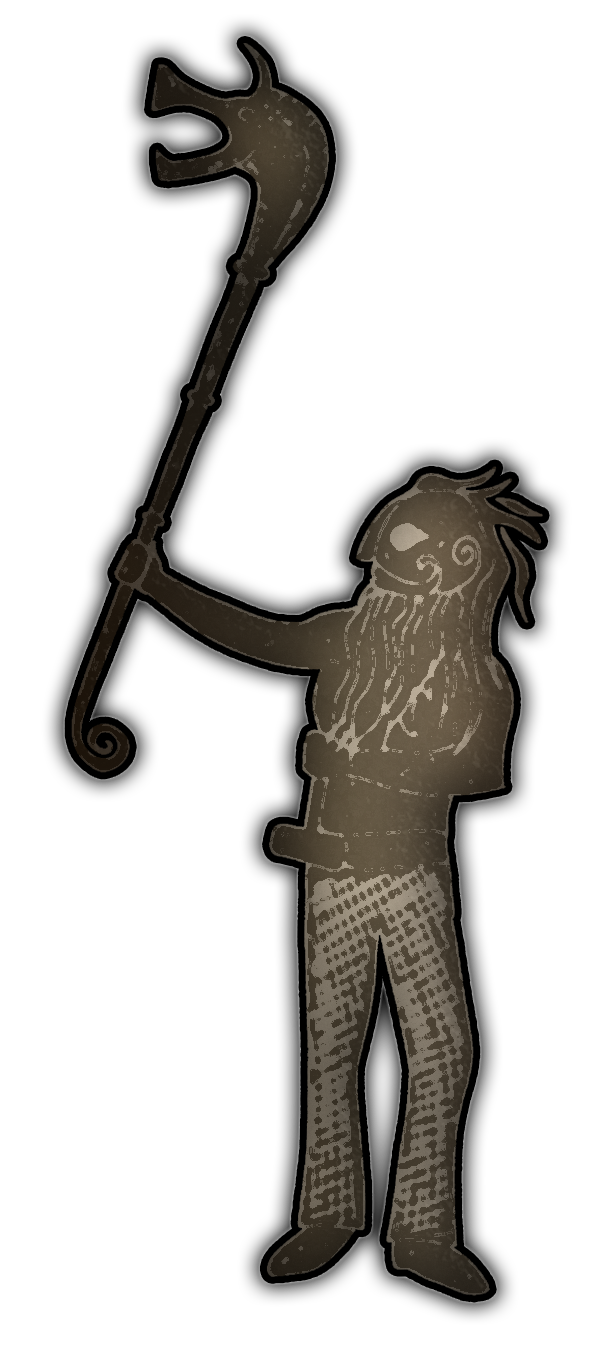
In the halls of Dubnos, Gobannos the Smith stands tall, his frame glistening with sweat as he wields his mighty hammer. With each swing, sparks fly from the anvil, and the rhythmic pounding echoes throughout the chamber. Gobannos is known far and wide as a master blacksmith, renowned for his skill in shaping magnificent gifts with his deft hands and keen eye. But Gobannos is more than just a smith; he is also a great traveler and a harbinger of inspiration. He ventures across distant lands, sharing his knowledge of the forge and fire with all who seek it. From the humblest village to the grandest kingdom, Gobannos imparts his wisdom to those eager to learn the ancient art of metalworking. Wherever he goes, Gobannos carries a flickering flame, a symbol of the passion and creativity that fuels his craft. He believes that the forge is not just a physical place but a state of mind—a place where ideas take shape and dreams become reality. With his teachings, he ignites the spark of imagination in the hearts of aspiring artisans, guiding them along the path of mastery.
Gobannos is revered not only for his skills as a blacksmith but also for his generosity and humility. He shares his expertise freely, never hoarding his knowledge or keeping it to himself. His workshops and demonstrations are filled with eager learners, hanging onto his every word and striving to emulate his artistry.
The gifts that Gobannos creates are more than mere objects; they are expressions of his passion and devotion. Each piece he forges tells a story, reflecting the character and desires of its intended recipient. Whether it’s a finely crafted sword for a valiant warrior, an ornate piece of jewelry for a noble, or a practical tool for a hardworking farmer, Gobannos imbues his creations with a touch of magic that sets them apart. In the halls of Dubnos, Gobannos the Smith continues to swing his hammer, shaping not only physical objects but also the dreams and aspirations of those who come into contact with him. Through his craftsmanship and teachings, he kindles the fires of creativity, leaving a lasting legacy that transcends the mere passage of time.
The Virtues He Radiates
One of the most important Virtues Gobannos teaches is that of Lugiā, the virtue of resourcefulness. Gobannos shows us of ingenuity and skill. His ability to adapt, create, and imitate is a testament to resourcefulness in the face of challenges. Let us cultivate this virtue, finding innovative solutions and making the most of our resources. Through resourcefulness, we will thrive even in the most demanding circumstances. And then, of course, Oigetocariā, the virtue of hospitality. His nature is known for his generous spirit, as he welcomes strangers to his smiths’ house without question, offering nourishment and shelter. Hospitality is a sacred duty, for in welcoming others, we embrace the spirit of unity and compassion. Let us remember to open our doors and hearts to those in need, for it is through hospitality that we create a sense of belonging and forge connections with others.
A Philosophy from the Hammer
“As the Hammer creates, it destroys, and as it destroys, it creates” is a paradoxical or contradictory idea.
At a basic level, a hammer is a tool commonly used for construction or destruction. When used in a constructive manner, it can be employed to create or build something, such as driving nails into wood to assemble structures. Conversely, when used destructively, a hammer can be employed to dismantle or break things apart. On the surface, it seems that the act of creating with a hammer involves building or shaping something new by utilizing its constructive properties. Conversely, the act of destroying with a hammer involves breaking down or dismantling existing structures or objects. So, in a metaphorical or symbolic sense, one could argue that the hammer’s actions can both create and destroy at the same time. Creation and Destruction are inherently intertwined and interconnected. In certain philosophical frameworks, creation is seen as an act of bringing something into existence, while destruction is viewed as the process of transforming or reshaping existing forms. This perspective suggests that creation and destruction are not separate or isolated phenomena but rather part of an ongoing cycle of change and transformation.
“As the Hammer creates, it destroys, and as it destroys, it creates” is a thought-provoking reflection on the duality of actions or a poetic expression of the interconnectedness of creation and destruction.
Into the Furnace of Alchemy
Gobannos association with metalworking serves as a profound metaphor for the alchemical process. He is the great magician. As a skilled blacksmith diligently heats and forges metal, transforming it into something entirely new, the alchemist harnesses the elements of fire and water to transmute base matter into something of elevated value and spiritual significance. By calling upon Gobannos, one can seek his assistance in this transformative journey, benefiting from his expertise and wisdom in the realm of alchemy. As the god of smithing, Gobannos shapes and molds, bringing the magnificent work of alchemy to life from the depths of his fiery furnace. Being a Deuos associated with smithing and metalworking, Gobannos embodies the essence of all the elements. In the intricate process of smithing, the skilled artisan combines and harnesses the power of each element to achieve the desired outcome.
- Working with metals – As a god of smithing, Gabannos can be called upon to work with metals. This can include alchemical processes such as calcination, dissolution, and distillation.
- Transformation – Gabannos is associated with transformation and change, which are important themes in alchemy. You can work with him to help transform negative emotions, thoughts, or situations into positive ones.
- Creative expression – Gabannos is also associated with creativity and craftsmanship. You can invoke him for inspiration and guidance in your artistic and creative pursuits.
- Protection – As a god of smithing, Gabannos is also a protector. You can call upon him for protection during your alchemical work or for general spiritual protection.
- Working with the elements: Fire is an important element in both smithing and alchemy. You can work with Gabannos to harness the power of fire and use it in your alchemical processes. However, as a god of craftsmanship, he can also be connected to the creative potential of water, which is often associated with the emotions and the unconscious mind.
By invoking the energy of Gobannos, one can tap into his creative inspiration and receive support in the profound transformation of emotions. This can be accomplished through engaging in rituals or meditations. Such practices allow for a deep connection with his energy, facilitating the unleashing of creative potential and aiding in emotional metamorphosis.
Words to Gobannos, the Smith of Transformation
Mighty Gobannos, master of the forge, I call upon your presence and power. With hammer in hand and fire in your heart, Guide me on the path of transformation and art.
Gobannos, Deuos of blacksmithing divine, Craftsman of minerals, your skills so fine. Shape and mold, with precision and grace, Lead me through the alchemical embrace.
As the hammer strikes, creation takes form, Through destruction, new life is born. I seek your wisdom, your creative fire, To inspire and guide my deepest desire.
In the halls of Dubnos, your domain, I stand before you, humble and plain. Open my mind to the secrets you hold, Unveil the mysteries of silver and gold.
Grant me the courage to face my fears, To transform my emotions, shed my tears. With your alchemical touch, let me be reborn, In the crucible of life, a new purpose sworn.
Gobannos, I invoke your name, Ancient smith, your power I claim. Infuse me with your creative might, Shape my soul, make darkness bright.
As I walk the path of the forge and flame, Let your energy guide and sustain. In gratitude, I honor your divine presence, Gobannos, god of alchemical essence.
The Alchemical Furnace – The alchemical furnace symbolizes the transformative process of Uerton (change of state from one thing to another.). In Gaulish alchemy which I call Uerton, the furnace is seen as a representation of the interplay between fire and water, which Belinos is the tender of. Fire represents the transformative power of the furnace. In contrast, water represents the cooling and balancing force that prevents the fire from consuming everything in its path.
Fire in Water – This concept recognizes the importance of the elements of fire and water in alchemical transformation.
The idea of fire in water represents the balance and interdependence of opposing forces. Fire is associated with transformation, passion, and energy, Fire represents the transformative power that brings about change, which also means destruction. While water is associated with life, emotion, and intuition, water represents the element of purification and cleansing but this also can be stagnation and a heavy flow of emotions. When the two elements come together, they create a powerful and dynamic force that can be both destructive and transformative. The concept of fire and water represents the balance and interplay of two seemingly opposing forces. In Uerton, this principle is incorporated into the transformational process by recognizing that it is through the interaction of opposing forces that change and growth occur.
The Divine Bond of Belinos and Gobannos
Belinos possessed a sacred flame, a fire that burned with the intensity of a thousand suns. This flame, however, was not of ordinary nature. It was a mystical fire that shimmered with the essence of creation, destruction, and transformation. But what made it truly extraordinary was its ability to reside within the depths of water, defying the laws of nature.
Gobannos, the mighty smith, had long been aware of the incredible power of Belinos. He witnessed how the god’s fire danced and flickered within the waters, creating a mesmerizing spectacle. Gobannos, who had dedicated his life to the forge and the alchemical arts, was both in awe and deeply inspired by the ability of Belinos to hold and maintain fire in water.
Driven by his admiration and desire to create with the same divine essence, Gobannos sought an audience with Belinos. The blacksmith stood before the radiant god, his eyes filled with reverence and his heart overflowing with curiosity. He humbly expressed his admiration for the power of Belinos and asked for his guidance in harnessing the transformative energy of fire and water.
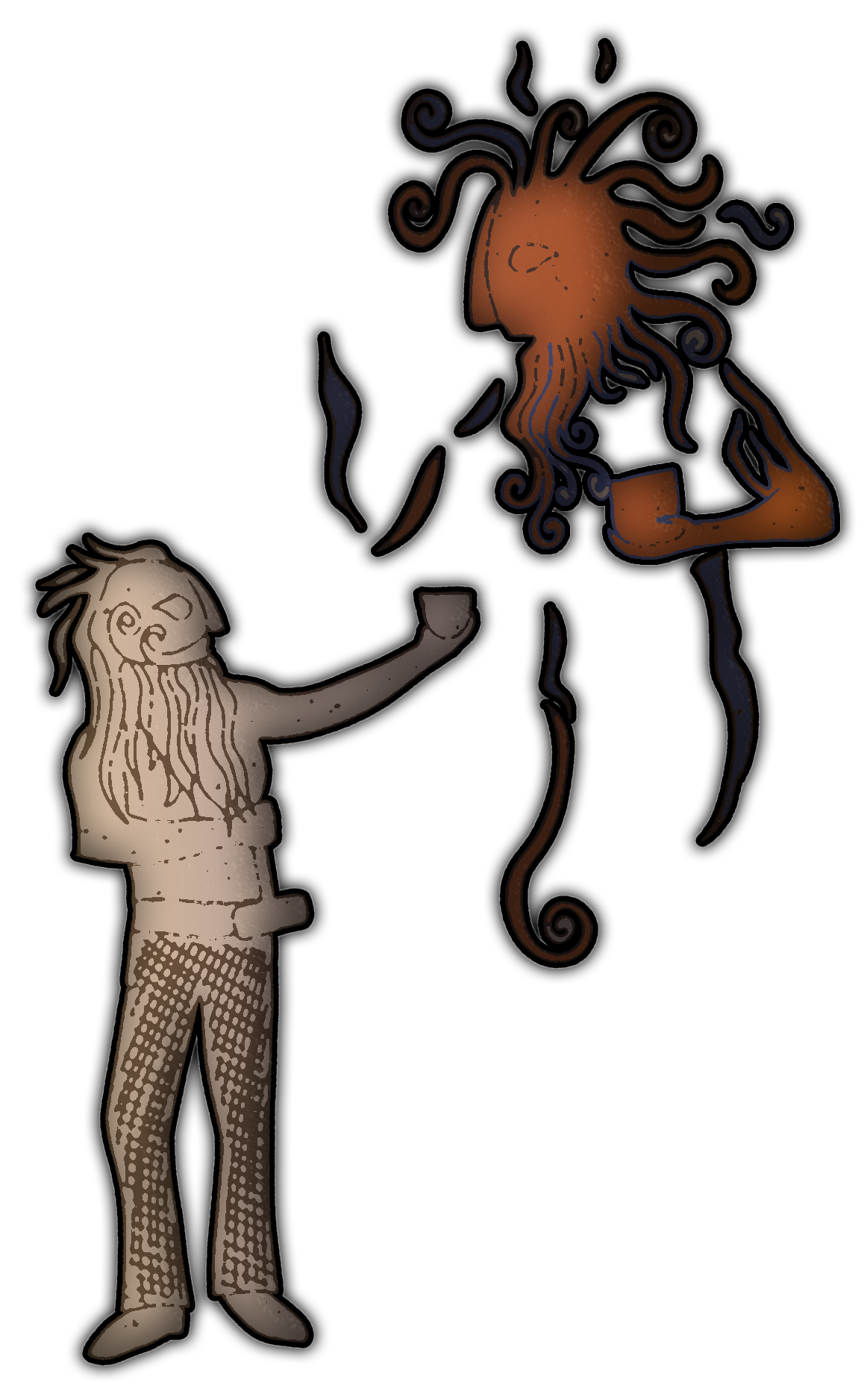
Belinos, in his infinite wisdom and kindness, recognized Gobannos sincere devotion and yearning for knowledge. He shared the secrets of his sacred flame, revealing that it was the delicate balance between fire and water that allowed it to exist. Fire symbolized the passion and energy of creation and destruction, while water represented the calm, chaotic, and nurturing force of transformation and stagnation.
Impressed by Gobannos dedication and inspired by his eagerness to learn, Belinos granted him a touch of the essence of his fire and water. Gobannos could now wield the power of fire and water in his own creations, but it was but a fraction of the divine essence that Belinos held within his realm.
From that day forward, Gobannos embarked on a remarkable journey, infusing his work with the touch of fire and water. The items he forged and crafted became imbued with a mystical quality, resonating with the transformative energy that he had been granted. Each piece told a story of the delicate dance between fire and water, of passion and calm, of creation and transformation, and of destruction and stagnation.
To this day, the legend of Belinos and Gobannos lives on, reminding us of the profound connection between fire in water. It teaches us that even a touch of divine essence can ignite our own creative fire and empower us to shape our lives in ways we never thought possible. Just as Gobannos was forever changed by the gift of Belinos, so too can we be transformed when we harness the power of fire in water within ourselves.
Embracing the Forge of Transformation (Meditation)
Sit in a quiet place in a comfortable position, light a candle, then invoke Gobannos.
Become aware of a gentle warmth spreading throughout your body. It starts from your core and radiates outwards, infusing every cell with the harmonious balance of fire and water.
Visualize this fusion of fire and water within you, igniting your inner flame of creativity and transformation. Feel the spark of inspiration growing stronger with each breath you take. Allow the energy of Gobannos to guide you on a journey of self-discovery and alchemical growth.
As you continue to bask in his presence, take a moment to set your intentions for this transformative journey. What aspects of your life or emotions would you like to forge and reshape? What creative endeavors or inner changes do you seek to manifest?
Now, imagine a metaphorical forge before you, with fire burning brightly and water flowing gently. See yourself stepping into this sacred space, feeling the heat of the flames and the soothing touch of the water.
With each breath, visualize your intentions merging with the fire and water, becoming part of the alchemical process. Feel the intense heat of the flames transmuting any obstacles or limitations, turning them into opportunities for growth. Sense the purifying essence of the water washing away any stagnant energy, cleansing and rejuvenating your being.
As you stand within this forge of alchemy, feel the transformative power flowing through you. Embrace the union of fire and water within your own being, knowing that you hold the capacity to forge and shape your own reality.
Take a few moments to fully immerse yourself in the energy of the forge, allowing the alchemical process to work its magic within you. Trust in the wisdom and the skill of Gobannos as you surrender to the transformative journey unfolding within.
When you are ready, express your gratitude to Gobannos for his presence and guidance. Slowly bring your awareness back to the present moment, feeling the sensations in your body and the steady rhythm of your breath.
Know that the essence of Gobannos, the fusion of fire and water, will always be within you. Carry this newfound inspiration and transformative energy with you as you continue your journey through life, knowing that you have the power to forge and shape your own destiny.
Note
- The above thoughts are my own personal views and do not represent the whole of Gaulish Paganism.
- More to come on the principles and concepts of Uerton.
- Translations of some of the Inscriptions done by Cunolugus Drugaisos
- Journal of Indo-European Studies Monograph Series 58 – Indo European Smith
- Epigraphik-Datenbank

 The Witch's and Druids Den
Leave a comment